



Renovation
Air-raid shelter for the Mykolaiv Vocational School of Construction Trades

-
Project area:700 m²
-
Number of beneficiaries:650
-
Project partners:Danish Refugee Council, Norwegian Refugee Council, MEGABUD
-
Budget Solidarity (planned):7 million
-
Budget Solidarity (actual):6.88 million*
-
Project end date:September 2025
*The actual cost was lower than anticipated thanks to efficient financial management, favorable terms from suppliers, and logistical support from a strategic partner.”
-
Project area:700 m²
-
Number of beneficiaries:650
-
Project partners:Danish Refugee Council, Norwegian Refugee Council, MEGABUD
-
Budget Solidarity (planned):7 million
-
Budget Solidarity (actual):6.88 million*
-
Project end date:September 2025
*The actual cost was lower than anticipated thanks to efficient financial management, favorable terms from suppliers, and logistical support from a strategic partner.”
Context and challenge
Holding classes during wartime requires special measures to ensure the safety of students and teachers. The Mykolaiv Construction College is a key educational institution in the region, training the future builders who will play a vital role in Ukraine’s reconstruction.
Although the college’s main building was damaged by shelling, classes could continue in the intact buildings — provided a secure shelter was available for students and staff. Creating such a space became a top priority for both the college and us.
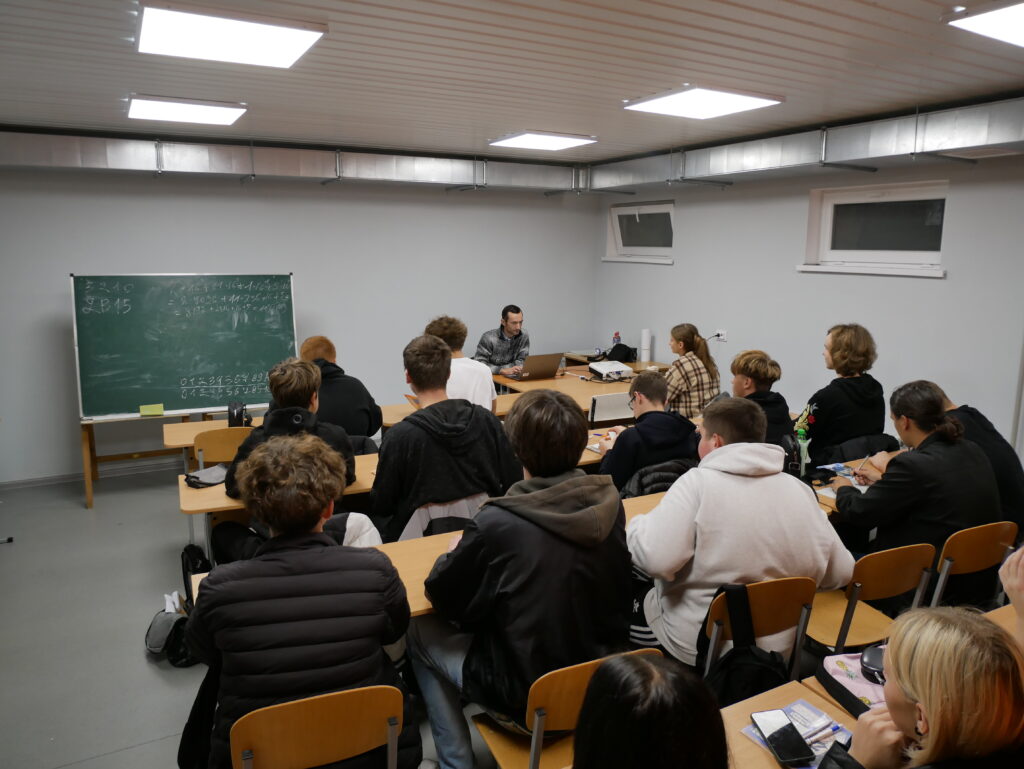

Before
→

After

Before
→

After
Solidarity Contribution
We implemented a project to create a modern dual-purpose shelter. As part of the project, we:
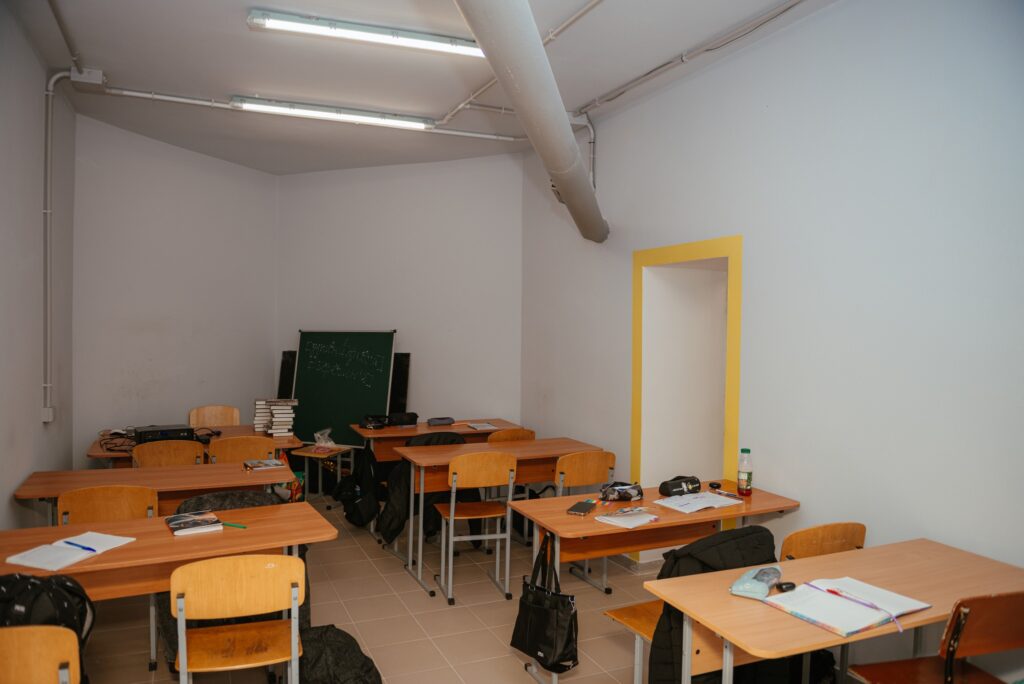
- Reconstructed a 700 m² shelter designed to accommodate up to 650 people;
- Fitted out:
-
- the main section — a standard shelter that protects against shelling and also serves as classrooms, a teachers’ room, and a medical station;
- an additional 200 m² radiation-proof shelter capable of providing protection in the event of a nuclear threat;
- Strengthened the ceiling and floor between the first floor and the shelter to enhance safety and reliability, ensuring the space functions effectively under any threat;
- Completely modernized the ventilation system, installed up-to-date equipment, and provided fresh air throughout the shelter;
- Waterproofed the ceiling and renovated the floors, restrooms, and other facilities in accordance with national regulations and modern standards.

Result and Impact
Thanks to the project, college students can partially resume their studies in a safe environment. The upgraded shelter will also be accessible to residents of nearby buildings and visitors to the city-center park, making it a socially important facility for the entire community.
This project shows that collaboration between a charitable organization and a socially responsible business can make large-scale initiatives possible — such as providing safe living and learning conditions even during wartime.


The main problem we face is personnel – teachers are not always able to come due to limited resources. They need to be provided with funding and support, including soft skills training, so they can teach students who will be rebuilding the Mykolaiv region and southern Ukraine. Our plans for the college are not about the building, but about the students, professors, and people capable of restoring the region.
Vitaliy Kim
Head of Mykolaiv Regional Military Administration
Support that unites
The shelter project at Mykolaiv Construction Vocational College brought together the charitable organization Solidarity, the construction hypermarket MEGABUD, and over 100 volunteers, including 24 MEGABUD employees who helped with painting.
Thanks to these joint efforts, the college was able to partially resume in-person classes starting September 1, 2025.
The project shows that collaboration between charitable organizations, socially responsible businesses, and dedicated volunteers not only restores infrastructure but also strengthens community bonds.


